Brian Andersen
•
May 21, 2026
Old Crime, New Code, and the New Compliance Clock
This thought leadership piece was written by Brian Andersen - Former HSI Supervisory Special Agent and Section Chief.
On May 14, 2026, Acting Deputy Assistant Attorney General Daniel Glad delivered remarks at the Antitrust West Coast Conference titled “Old Crime, New Code.” The speech was framed around algorithmic price-fixing, but its significance reaches beyond antitrust.
Glad made a simple point with broad consequences: the tool may change, but the underlying conduct does not. Software does not launder collusion. A model, platform, vendor, or algorithm does not change the rule when competitors stop competing.
His remarks also pointed to something larger: an enforcement environment increasingly built around structured records, digital residue, proactive detection, individual accountability, and real compliance before misconduct occurs.
Several themes stand out.
Proactive detection.
Glad described the building blocks of cartel detection as insider visibility, structured records, and deliberate incentives. In procurement environments, he noted that standardized bidding, documented communications, repeat interactions, and institutional recordkeeping make misconduct unusually detectable when the right people are trained to see it.
Digital residue.
Glad was explicit that detection capability does not diminish when conduct migrates into software. It grows. Every automated bid is a structured record. Every query leaves a log. Every change in parameters is a timestamp. The paper trail does not disappear when conduct moves into software. It multiplies.
No hiding behind the tool.
“The model did it” is not compliance. Companies must understand which tools they use, what data flows through them, what the outputs mean, and whether those tools create or conceal risk.
Individual exposure.
Glad identified the people who may become witnesses, whistleblowers, or subjects in algorithmic cases: engineers, data scientists, product managers, account managers, compliance professionals, and others who understand how the systems work. The move from human conversations to machine-assisted ones does not eliminate human accountability.
Corporate enforcement pressure.
Glad also tied his remarks to DOJ’s Department-wide Corporate Enforcement Policy (CEP). That matters. The CEP applies across DOJ corporate criminal matters outside antitrust and is built around early voluntary self-disclosure, full cooperation, timely remediation, and individual accountability.
While Glad’s remarks focused on algorithmic antitrust and procurement collusion, the procurement environment he described has broader significance. The same structured records, repeat contractor interactions, documented communications, and institutional buying processes that can expose bid rigging or price fixing can also expose other forms of procurement and supply chain misconduct.
That includes contractors who knowingly supply counterfeit, substandard, nonconforming, or falsely certified goods into U.S. government supply chains. The legal theory may differ. The operational problem is familiar: hidden supplier relationships, opaque ownership structures, false representations, fragmented records, foreign sourcing, customs violations, and delayed visibility into the true nature of the goods or actors involved.
The legal theory may differ. The operational problem is familiar: hidden supplier relationships, opaque ownership structures, false representations, fragmented records, foreign sourcing, customs violations, and delayed visibility into the true nature of the goods or actors involved.
That was a recurring challenge in the work Brian Andersen led while building HSI’s Government Supply Chain Investigations Unit. The overlap with PCSF-style procurement integrity work was not theoretical. Both environments depend on the ability to identify patterns inside structured procurement activity, connect contractor and supplier relationships, and understand whether the facts show mistake, negligence, fraud, collusion, or knowing misconduct.
The same problem now sits inside the compliance function of every multinational, manufacturer, exporter, defense contractor, and procurement team operating across borders.
The practical challenge is that this standard is difficult to meet.
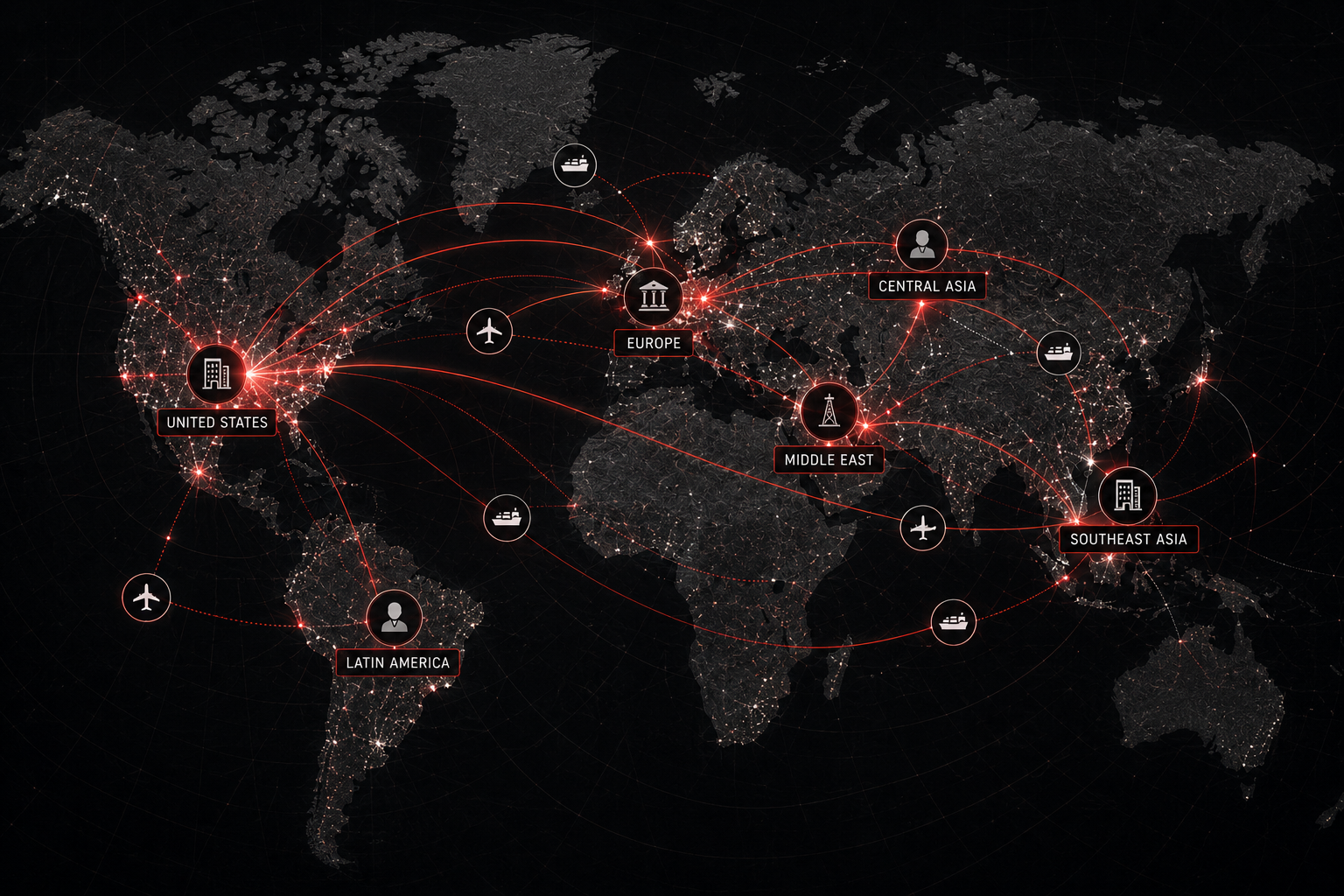
Hidden ownership in opaque jurisdictions. Shell entities layered across Hong Kong, Singapore, Cayman, BVI, and other corporate-service hubs. Directors and beneficial owners whose affiliations sit in registries that do not speak to one another. Local-language media, court filings, procurement records, shipping data, and corporate records that most compliance teams cannot access or evaluate at scale.
That was a recurring challenge in the work Brian Andersen led while building HSI’s Government Supply Chain Investigations Unit. The overlap with PCSF-style procurement integrity work was not theoretical. Both environments depend on the ability to identify patterns inside structured procurement activity, connect contractor and supplier relationships, and understand whether the facts show mistake, negligence, fraud, collusion, or knowing misconduct.
The same problem now sits inside the compliance function of every multinational, manufacturer, exporter, defense contractor, and procurement team operating across borders.
The practical challenge is that this standard is difficult to meet.
Hidden ownership in opaque jurisdictions. Shell entities layered across Hong Kong, Singapore, Cayman, BVI, and other corporate-service hubs. Directors and beneficial owners whose affiliations sit in registries that do not speak to one another. Local-language media, court filings, procurement records, shipping data, and corporate records that most compliance teams cannot access or evaluate at scale.
The information often exists. It is fragmented, multilingual, jurisdiction-specific, and slow to assemble.
The CEP adds the private-sector pressure point. Once a company has reason to know misconduct may exist, DOJ’s policy rewards organizations that can identify the issue early, understand it quickly, preserve and explain the evidence, identify responsible individuals and third parties, and remediate credibly.
That is where the operating model has to change.
Tesari was built for that gap.
The platform integrates live data sources across more than 200 countries, supports runtime entity resolution across languages, surfaces ownership and control structures including indirect and beneficial relationships, maps digital footprints across selectors, and produces a defensible investigation file in minutes rather than weeks.
This distinction matters.
This is not a screening result. It is an investigation trail.
It helps answer the question DOJ is increasingly asking companies in one form or another:
How did you know, and what did you do with what you knew?
The enforcement posture is here. The standard is rising. The organizations that operationalize this capability early will help define the new baseline.
The CEP adds the private-sector pressure point. Once a company has reason to know misconduct may exist, DOJ’s policy rewards organizations that can identify the issue early, understand it quickly, preserve and explain the evidence, identify responsible individuals and third parties, and remediate credibly.
That was a recurring challenge in the work Brian Andersen led while building HSI’s Government Supply Chain Investigations Unit. The overlap with PCSF-style procurement integrity work was not theoretical. Both environments depend on the ability to identify patterns inside structured procurement activity, connect contractor and supplier relationships, and understand whether the facts show mistake, negligence, fraud, collusion, or knowing misconduct.
The same problem now sits inside the compliance function of every multinational, manufacturer, exporter, defense contractor, and procurement team operating across borders.
The practical challenge is that this standard is difficult to meet.
Hidden ownership in opaque jurisdictions. Shell entities layered across Hong Kong, Singapore, Cayman, BVI, and other corporate-service hubs. Directors and beneficial owners whose affiliations sit in registries that do not speak to one another. Local-language media, court filings, procurement records, shipping data, and corporate records that most compliance teams cannot access or evaluate at scale.
The information often exists. It is fragmented, multilingual, jurisdiction-specific, and slow to assemble.
The CEP adds the private-sector pressure point. Once a company has reason to know misconduct may exist, DOJ’s policy rewards organizations that can identify the issue early, understand it quickly, preserve and explain the evidence, identify responsible individuals and third parties, and remediate credibly.
That is where the operating model has to change.
Tesari was built for that gap.
The platform integrates live data sources across more than 200 countries, supports runtime entity resolution across languages, surfaces ownership and control structures including indirect and beneficial relationships, maps digital footprints across selectors, and produces a defensible investigation file in minutes rather than weeks.
This distinction matters.
This is not a screening result. It is an investigation trail.
It helps answer the question DOJ is increasingly asking companies in one form or another:
How did you know, and what did you do with what you knew?
The enforcement posture is here. The standard is rising. The organizations that operationalize this capability early will help define the new baseline.


